

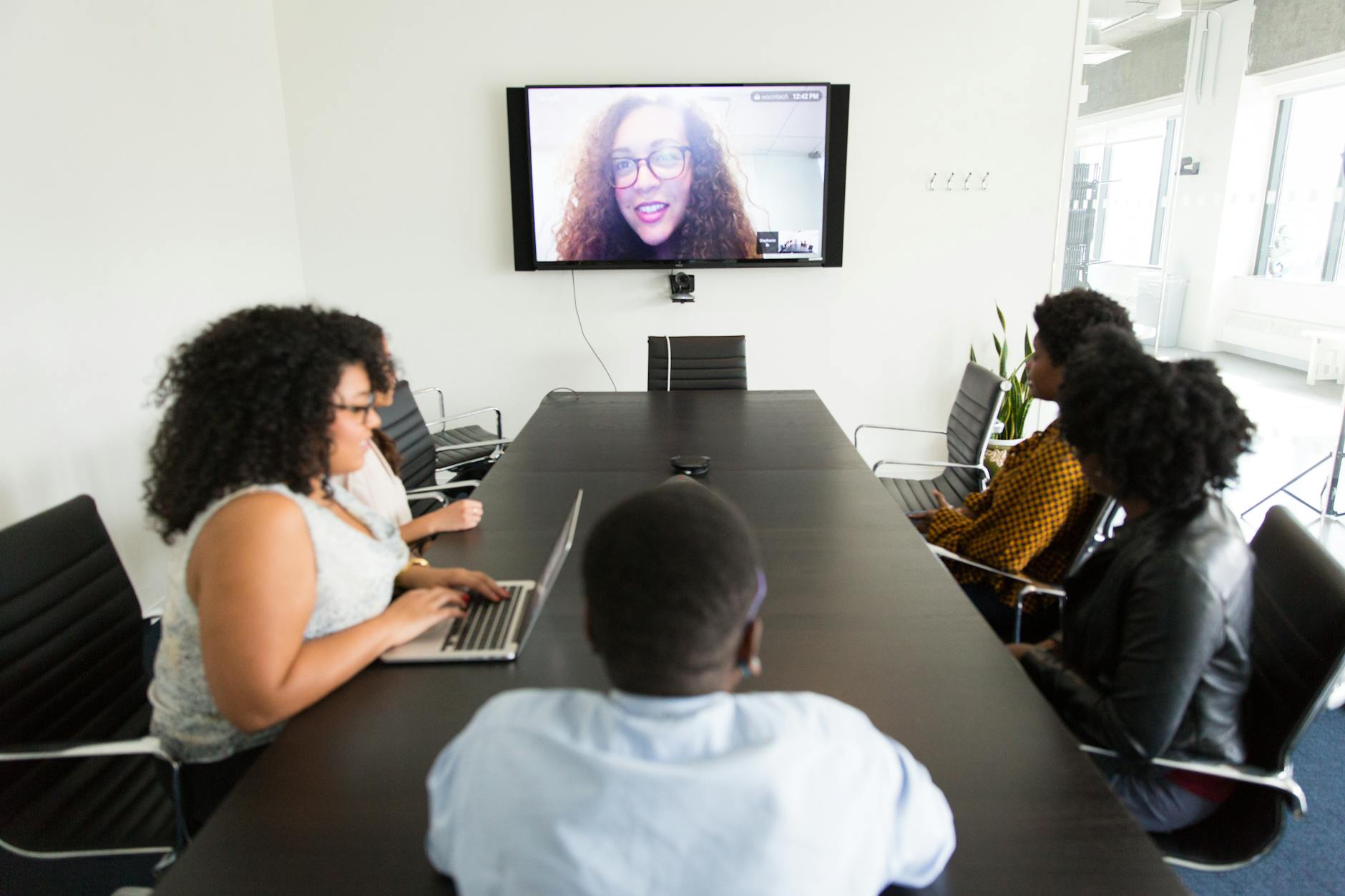
The Paradox That Should Keep You Awake
Your remote employees score well on engagement surveys. They report autonomy, flexibility and a sense of purpose. Yet the same cohort is quietly accumulating stress at a rate that outpaces their office-based colleagues.
This is not a contradiction. It is a structural problem with a specific, measurable driver: meeting load. And if you are not reading it in your calendar data and pulse scores today, you are likely to read it in your absenteeism figures six months from now.
Why Meeting Load Is a Distinct Wellbeing Signal
Meeting fatigue is often treated as a productivity complaint, the kind of thing that surfaces in an all-hands and then disappears. That framing misses the point. For knowledge workers in hybrid teams, back-to-back meetings do not just reduce output time. They eliminate recovery time, and recovery is the physiological mechanism that separates sustainable performance from burnout.
The Eurofound European Working Conditions Survey 2024 found that working at high speed and to tight deadlines remains one of the most consistent predictors of poor wellbeing across European knowledge workers. Unbroken meeting blocks are a direct mechanism through which that pressure is delivered, hour after hour, without the micro-recoveries that in-office workers often get naturally through movement, informal chat and physical transitions between spaces.
Remote employees in hybrid teams are disproportionately exposed to this pattern. Because they are not physically present, they are easier to schedule. Because they have no commute, the assumption is that their time is more available. The result is a calendar that fills faster and empties less often.
What the Data Tells Us
According to Gallup's State of the Global Workplace, employee stress reached a record high globally, with a significant share of that stress concentrated in workers who report high workload intensity alongside high engagement. That combination, high engagement and high stress, is precisely the profile of the remote knowledge worker who is at greatest risk of burning out quietly.
The Eurofound EWCS 2024 Highlights reinforce this picture: workers who lack control over their work pace and who experience frequent interruptions report significantly lower wellbeing scores, even when they rate their job satisfaction highly. A calendar packed with sequential meetings is both an interruption machine and a pace-control eliminator.
In the Netherlands specifically, Arboned reported that stress-related sickness absence increased 8% between July 2024 and June 2025 compared to the prior 12-month period, and has risen 36% over five years. CBS data for 2025 shows that when employees do go absent for psychological reasons, including burnout, the median absence episode lasts 30 workdays and the average reaches 66.6 workdays. That is not a short-term disruption. It is a structural cost.
Reading the Signal Before It Compounds
The challenge with meeting overload as a wellbeing risk is that it does not look like a crisis until it is one. An employee who attends seven meetings a day will not score zero on a pulse survey. They will score a six or a seven on energy, a five on focus, and they will add a comment about feeling stretched. Individually, that is noise. Aggregated across a team over three or four weeks, it is a pattern.
HR leaders who connect pulse data to calendar density gain a leading indicator that lagging measures like absenteeism cannot provide. Specifically, watch for three converging signals:
1. Recovery Score Decline Across Meeting-Heavy Cohorts
When teams with above-average meeting loads show a sustained drop in recovery or energy scores over two or more consecutive pulse cycles, the calendar is almost certainly a contributing factor. The drop does not need to be dramatic. A consistent drift of half a point per week is enough to warrant a conversation with the team lead.
2. Focus and Deep Work Scores Diverging from Engagement
High engagement alongside low focus scores is a red flag specific to meeting overload. The employee still cares about their work. They simply cannot do it. This divergence, captured in a well-designed pulse survey, is one of the clearest early indicators of impending exhaustion.
3. Meeting Acceptance Rate and After-Hours Patterns
Calendar data alone, where accessible, can show whether employees are regularly accepting meetings that start before 09:00 or end after 18:00, or whether they are attending meetings during what should be lunch or recovery blocks. When this pattern appears consistently in a segment of your workforce, it is not a personal time-management issue. It is a structural design failure.
Structural Changes That Actually Work
The IRShare and Eurofound analysis of working conditions in 2025 points to one consistent finding: individual coping strategies do not move the needle on work-related stress. Structural interventions do. For meeting overload specifically, the changes that reduce load without breaking collaboration tend to share three characteristics.
First, they are team-level, not individual. A no-meeting morning block only works if the entire team honours it. A personal calendar rule is just friction.
Second, they are asynchronous by default. Replacing a 45-minute status update meeting with a shared document and a 10-minute optional check-in does not reduce collaboration. It shifts collaboration to a format that allows recovery between contributions.
Third, they are monitored. If you introduce a meeting reduction policy and never measure its effect on pulse scores, you will not know whether it worked. Connecting the structural change to a measurable wellbeing outcome is what separates a policy from a programme.
What HR Leaders Can Do This Quarter
You do not need a full engagement programme to act on meeting overload. You need three things: a pulse survey that captures energy and focus at team level, a willingness to look at calendar density alongside those scores, and a conversation with team leads about what the data shows.
Start with the teams that score lowest on recovery and highest on reported workload. Ask whether their meeting load is a structural feature of how work is designed, or whether it has grown by default. In most cases, it has grown by default, and that means it can be redesigned.
Meeting fatigue is not a soft problem. It is a measurable, manageable wellbeing signal that sits in data you already have access to. The question is whether you are reading it.

Ready To Listen To Your Team?
Book a 30-minute demo and see how one daily click turns into real wellbeing insights for your organization.
Straight into the calendar, no strings attached.


